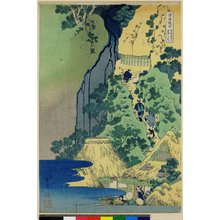
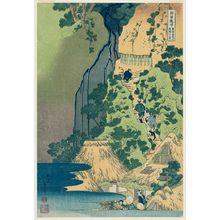
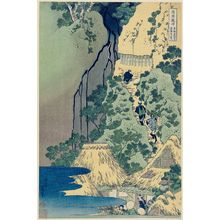
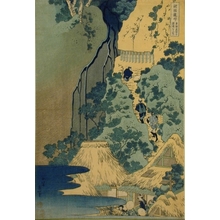
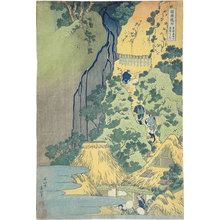
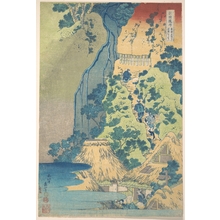
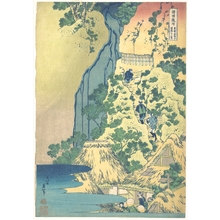
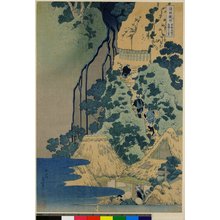
葛飾北斎による浮世絵「Kiyotaki Kannon Waterfall at Sakanoshita on the Tōkaidō」
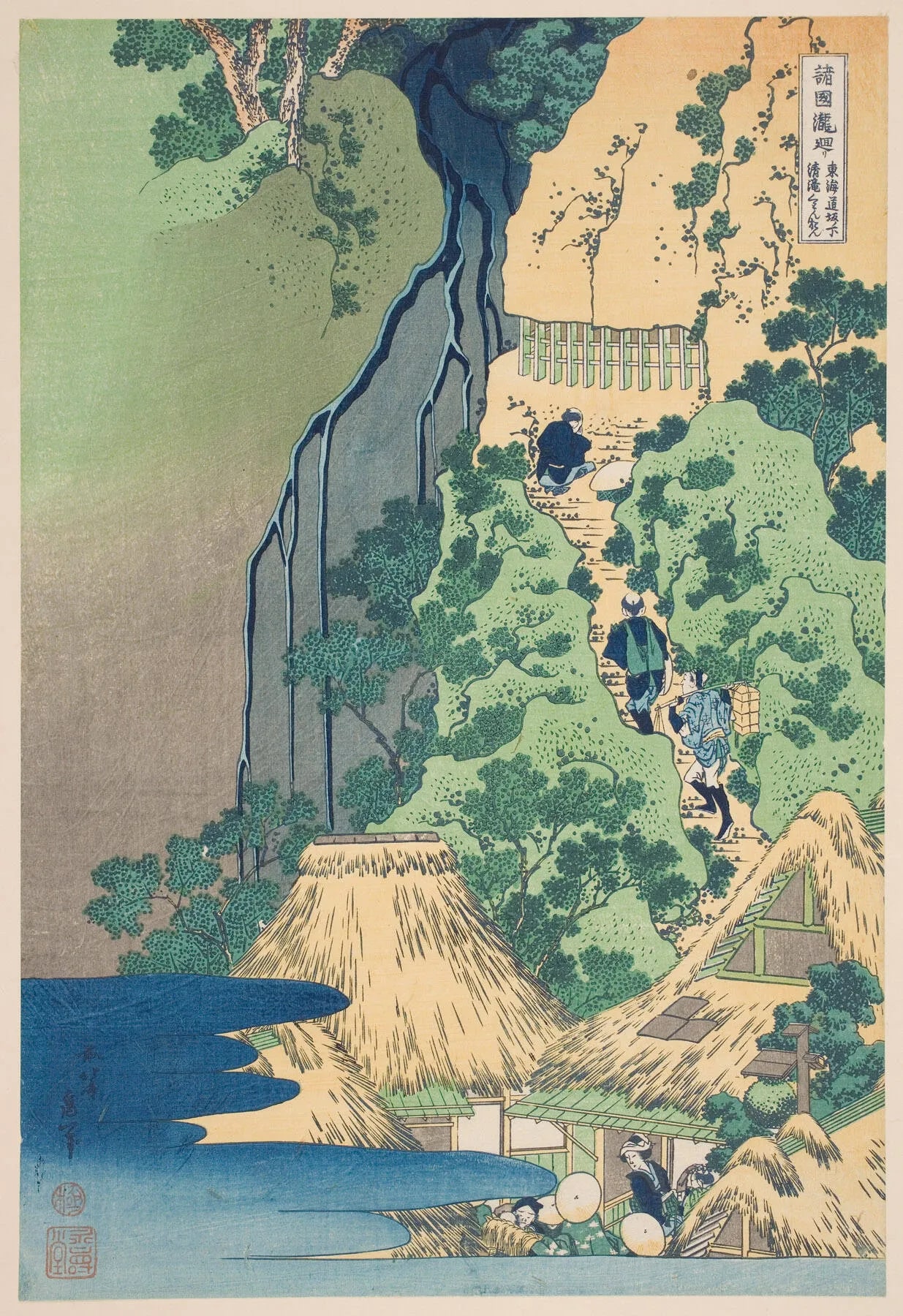
作者:葛飾北斎
作品名:Kiyotaki Kannon Waterfall at Sakanoshita on the Tōkaidō
制作年:about 1833
詳細:詳細情報...
情報源:ウスター美術館
浮世絵(全 3,039 件)を表示...
説明:
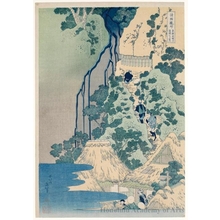
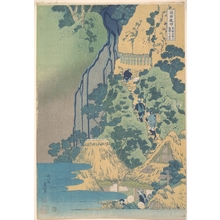
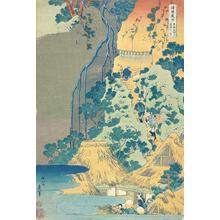
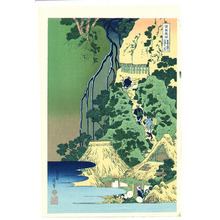
Pilgrims climbing the steps to a mountain shrine Kiyo Waterfall ("kiyo": ‘pure’) gained its name because of its exceptionally clear water. Depicted as emerging from the center top margin and set against the background of a large grey rock, the waterfall divides into vein-like spills. The bottom of the falls is hidden behind trees, blue cloudlike mist-banks and the roofs of wayside tea-houses. In Hokusai’s day there were numerous inns for travelers in Sakanoshita, then in Ise Province. It was a flourishing post station on the Tokaido (the ‘Eastern Highway’ which ran east to west along the eastern coast from Edo to Kyoto) because of its location at the entrance to Suzuka Pass. The mountain scenery was famous for Fudesuteyama (‘Mount Throw Away Brush’), a mountain associated with the legend that the famous painter Kano Motonobu (1476-1559) threw away his brush when he was unable to capture the beauty of the mountain. Hokusai shows a woman tempting a few travelers to rest and take some refreshments at one of the establishments. The steep path to the right of the waterfall leads up to a small grotto-temple dedicated to Kannon, the Bodhisattva of Compassion and Mercy. One man is kneeling, deep in prayer; two others are still making their way up the mountain slope. Today Sakanoshita village is incorporated into Kameyama City in Mie Prefecture, and comprises just over one hundred households, and very few historical buildings. The reason for its decline during the Meiji period (1868-1912) was that the Suzuka Pass was too steep for rail lines to be laid, so Sakanoshita was bypassed to go through what is present-day Iga City.
類似の浮世絵